What the evidence says
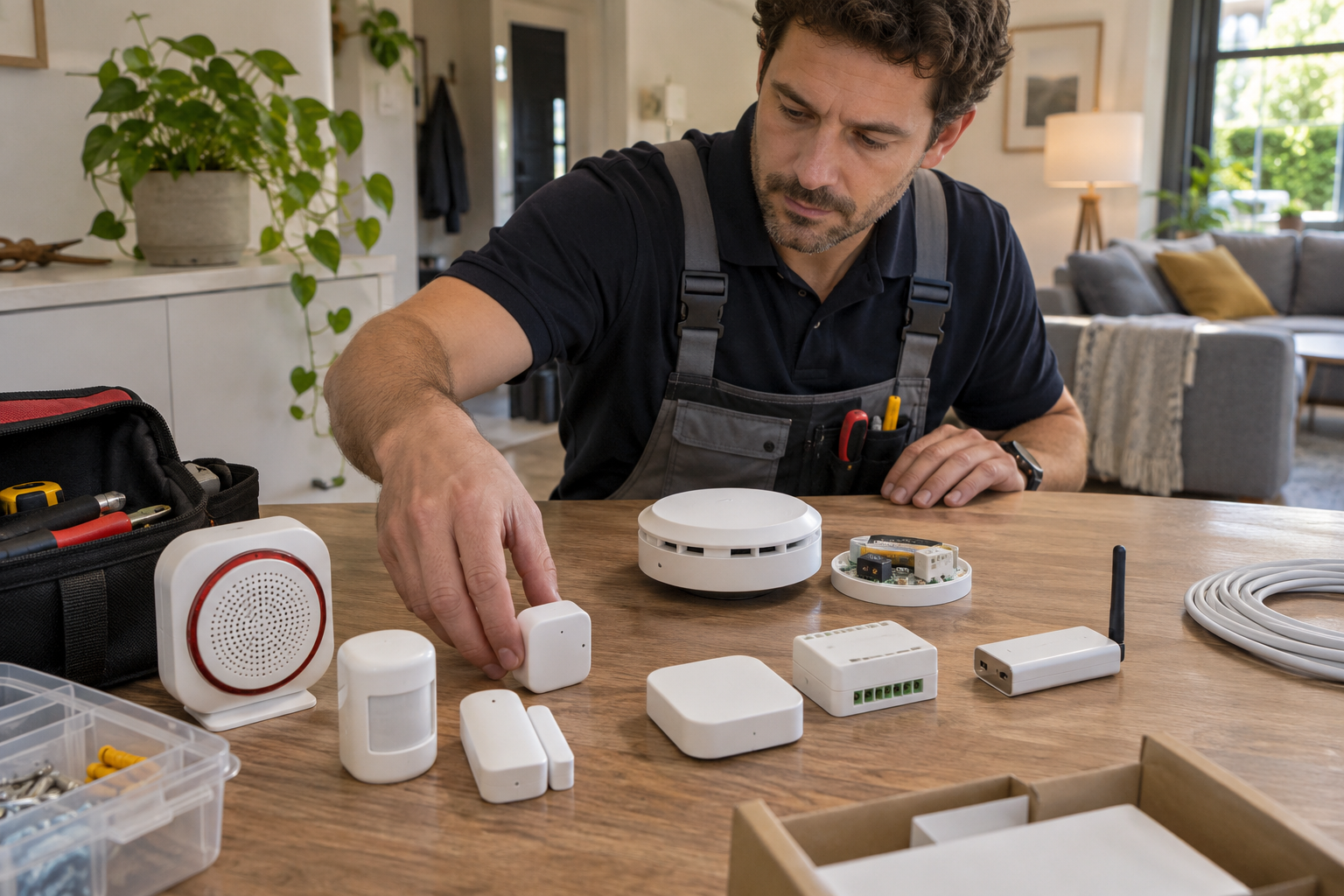
Home Assistant says Aeotec has joined the Works with Home Assistant program, bringing nine certified devices into the initiative. The announcement describes a range that includes sensors, sirens, switches, a smoke-detector upgrade, and new Z-Wave Long Range devices from Aeotec’s 8 series. That is the concrete product move supported by the supplied evidence: Aeotec is participating in the program, and nine devices carry the certification claim.
Home Assistant also describes Aeotec as a long-standing smart-home hardware company that began as Aeon Labs in Silicon Valley in 2006, changed its name to Aeotec in 2016, and later merged with Z-Wave Europe. The publisher says the combined organization has offices and expertise across three continents. This background helps explain Aeotec’s established connection to Z-Wave hardware, but it does not demonstrate how any of the nine certified products perform in a particular home.
Crucially, this is a primary announcement from Home Assistant, the operator of the program being discussed. It documents the partnership and device count, but the supplied source set contains no independent report, laboratory evaluation, installer account, or hands-on review against which to compare those claims. Independent verification or testing is therefore not available here.
Buyer and operator implications
Analysis: The announcement gives Home Assistant households and professional operators a defined group of Aeotec products to investigate, rather than proof that every Aeotec device will fit every installation. The category spread could make the announcement relevant to projects involving sensing, switching, audible alerts, smoke-detector upgrades, or Z-Wave Long Range equipment. However, the evidence does not identify the nine models or explain what the certification covers for each one.
For buyers, the immediate decision is whether certified Aeotec devices deserve model-level evaluation for an existing or planned Home Assistant deployment. For installers, the practical issue is whether the exact device, controller, regional configuration, and intended automation can be validated before installation. Certification should be treated as an input to that process, not as independent evidence of range, reliability, setup difficulty, or suitability for a safety-related use.
Recommended verification before purchase or deployment:
- Verify the exact Aeotec model identifier against the current Works with Home Assistant listing.
- Confirm whether the intended device and controller support the required Z-Wave or Z-Wave Long Range configuration.
- Check installation instructions, power requirements, firmware prerequisites, and regional availability for the selected model.
- Test pairing, status reporting, automations, recovery behavior, and alert delivery in the actual Home Assistant environment.
- Compare the smoke-detector upgrade’s documented role with local safety requirements and the existing detector arrangement.
These are conditional checks, not findings from the announcement. They help separate the supported certification claim from questions that require product documentation, local inspection, or independent testing.
Limits and verification
The source set does not establish the names of the nine devices, their prices, release status, regional variants, certification criteria, firmware versions, installation procedures, or the protocol used by every product. It also does not establish measured Z-Wave Long Range coverage, response time, reliability, privacy behavior, safety performance, or comparative superiority. No independent testing is available in the supplied material, so the announcement cannot support a buying recommendation by itself. Buyers and operators should verify the current program listing and model documentation, then test the chosen hardware under the conditions in which it will operate.