Android's Interoperability Order Is a Home Assistant Watchlist, Not a Feature
Home Assistant has a credible new path toward deeper Android integration. It does not have a new Android feature to sell you today.
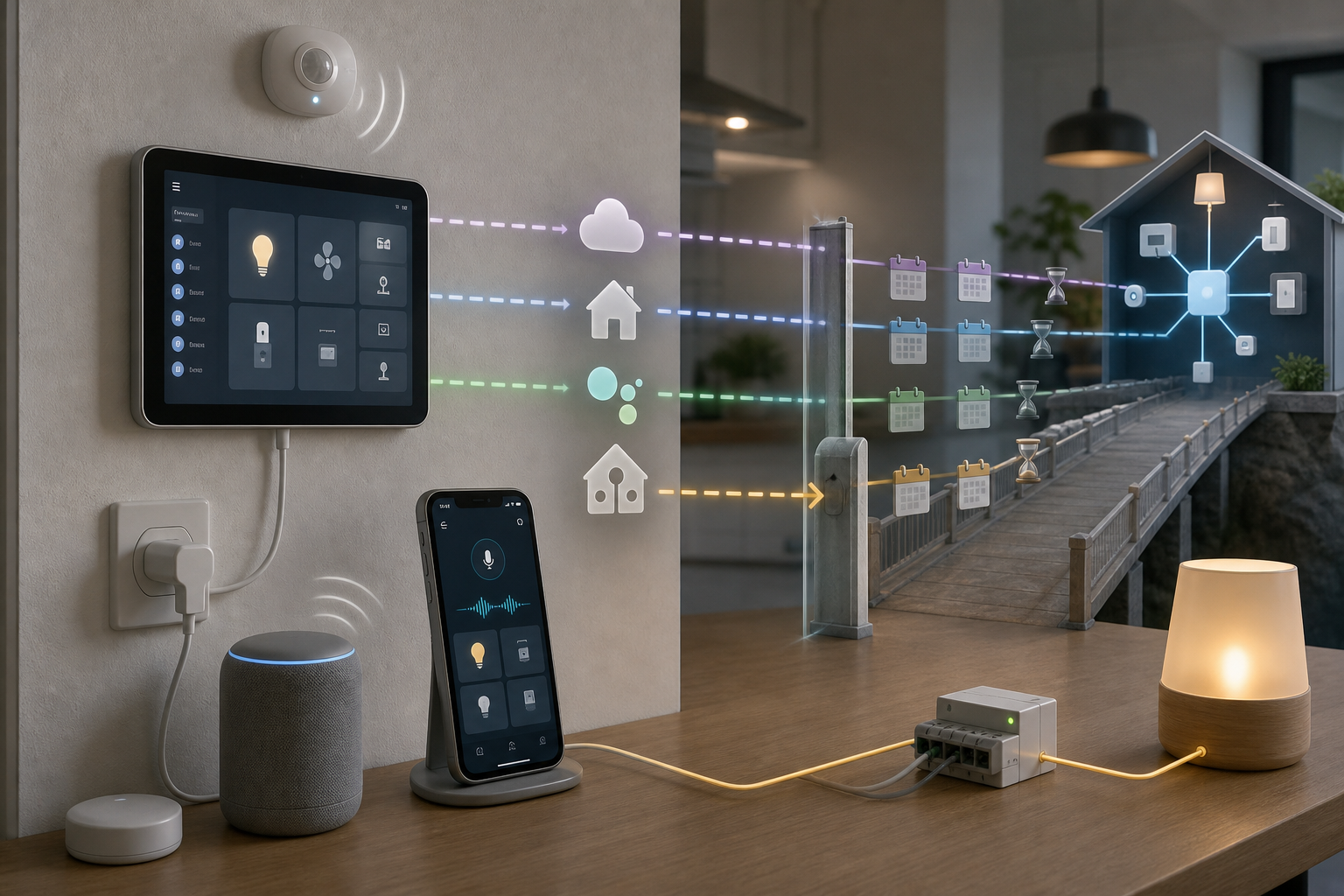
That distinction matters if you use a phone or tablet as a wall dashboard, presence source, voice endpoint, or automation controller. The European Commission has ordered Google to give competing AI services effective access to eleven Android capabilities. Home Assistant says its Android developer participated in the consultation and points to always-on wake words, ambient sensors, and screen automation as important possibilities.
The practical move is to watch the implementation—not buy hardware on the announcement.
What the Decision Actually Opens
The Commission groups the eleven capabilities into four areas: invoking an assistant, understanding context, acting across apps and Android, and using device resources.
The list reaches well beyond replacing one voice app with another. It includes wake-word activation while the screen is off, approved access to app and sensor context, structured app actions, screen automation, system settings, on-device models, and background execution.
For a smart home, that could eventually make an Android device a more capable local interface. A chosen assistant might respond hands-free, use permitted device context, or complete an action without forcing every step through Google's assistant.
“Could” is doing important work. The decision creates access obligations for Google. It does not announce that Home Assistant has implemented those access paths, passed any required eligibility review, or committed to a release date.
The Dates Make This a Roadmap
Most of the measures must arrive with Android 18 and no later than August 1, 2027. Concurrent hotword detection—the ability for more than one service to listen for its own wake word—is due with Android 19 by August 1, 2028.
Those are platform deadlines, not upgrade guarantees for a device you buy now. The Commission also says the measures do not require manufacturers to add hardware a device does not already have. A tablet without the necessary hardware does not become a better far-field voice terminal because an interoperability rule exists.
Before repurposing or purchasing an endpoint, wait for five concrete answers:
- Does the exact device receive the required Android release? - Does Home Assistant—or another chosen service—actually support the capability? - Is it available in the device's region and vendor build? - Which permissions and certification gates apply? - What continues working when the assistant, network, or account is unavailable?
More Access Means a Bigger Permission Decision
Some of these capabilities can touch microphone, camera, screen, speakers, location signals, app data, system settings, and background execution. The Commission says users must explicitly consent. It also allows objective privacy, security, and integrity eligibility conditions for five sensitive classes, including screen automation, structured app integration, system integration, centralized app-data access, and context-aware intelligence.
That is a safeguard, not a reason to approve everything.
AP independently reported the order and Google's objection that broader access could weaken privacy and security protections. That objection does not erase the interoperability benefit, but it identifies the buyer's real tradeoff: assistant choice is valuable only when access remains understandable, narrow, and reversible.
When implementations arrive, review each permission separately. Check whether sensor processing is local or cloud-based, how background actions are logged, how access is revoked, and whether the assistant can control locks, doors, alarms, cooking equipment, or high-load devices. Keep physical controls and a non-assistant fallback for consequential actions.
The Best Adoption Plan Is One Endpoint First
Do not redesign a household around a regulatory deadline. Start with one noncritical Android endpoint and one reversible task.
Test wake response, false activations, battery impact, latency, permission prompts, restart behavior, and failure when the network is down. Verify that a voice or screen action changes the intended Home Assistant entity—and only that entity. Then review the device's microphone, camera, location, and background-access settings before expanding to another room.
The Commission's decision is meaningful because it may loosen Android's deepest assistant lock-ins. Home Assistant's participation makes the smart-home opportunity more than speculation. But the buyer signal is not “upgrade now.” It is “demand proof when the software ships.”
- https://www.home-assistant.io/blog/2026/07/31/a-big-win-for-android-interoperability/ - https://digital-markets-act.ec.europa.eu/developer-portal/interoperability/alphabet-specification-proceedings-interoperability-ai-services_en - https://apnews.com/article/eu-google-android-antitrust-184b3067120e56d858cb8c81aee26d45