FireAvert's Home Assistant Badge Is About the Backup Layer
FireAvert's new Works with Home Assistant certification matters for an unusual reason: the most important automation does not need Home Assistant.
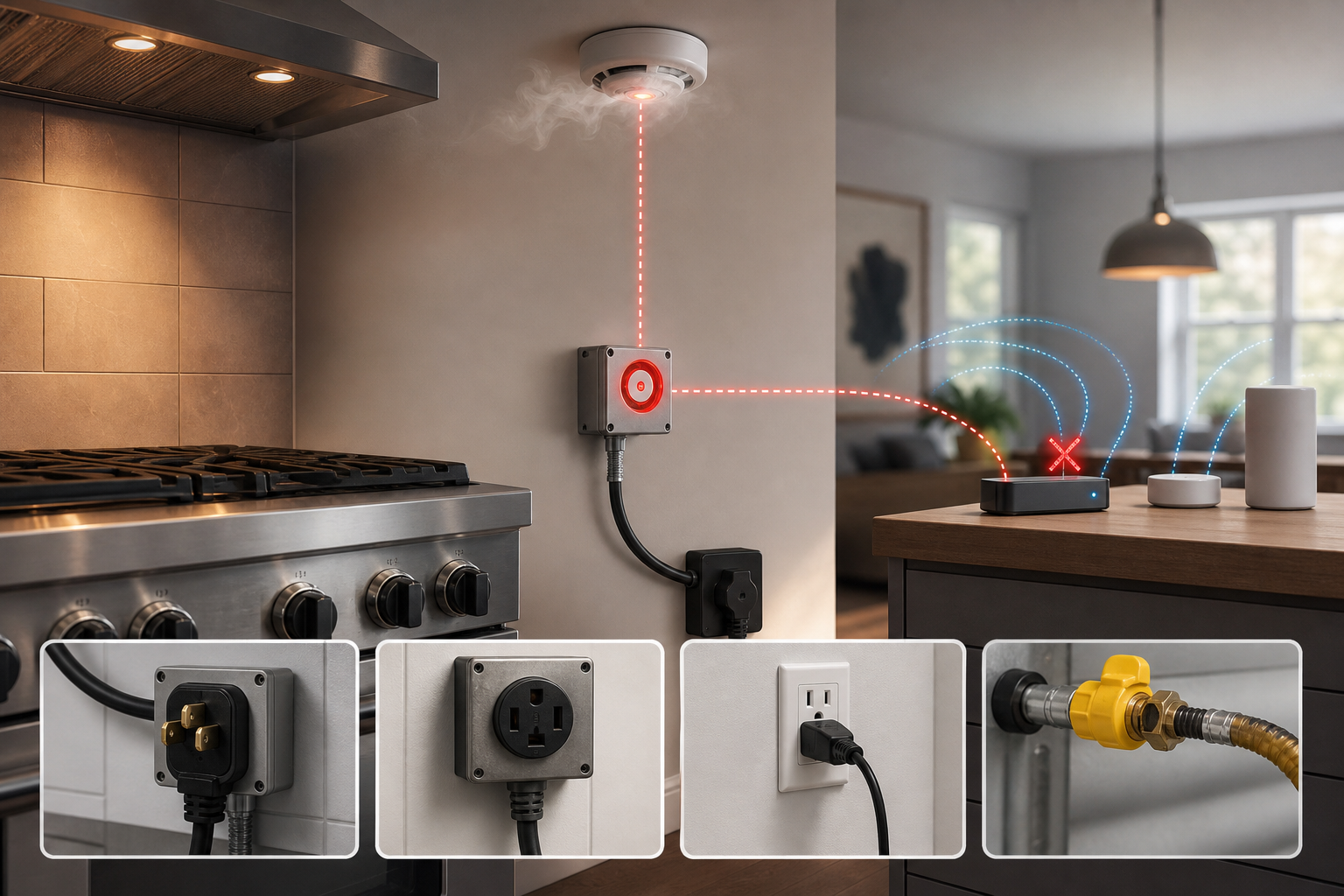
The company's Z-Wave shutoffs listen for a standard smoke alarm and cut power or fuel at the appliance. Home Assistant says that core action continues if the smart-home network goes down. Z-Wave adds local visibility and automation around the safety device; it is not supposed to become the safety device.
That architecture is the right starting point for a kitchen system. A hub reboot, broken automation, failed internet connection, or phone with no service should not disable the last-resort shutoff.
Four Models, Not One Universal Plug
The certification covers four FireAvert products for the United States and Canada:
- FA-EZ-10-50 for 240V electric stoves with a 3-prong connection - FA-EZ-14-50 for 240V electric stoves with a 4-prong connection - FA-EZ-5-15 for 120V appliances - FA-GZ-5-15 for gas appliances
FireAvert's live U.S. storefront listed the Z-Wave product at $249.99 on July 31, with gas, both electric-plug types, and the 120V version as selectable variants.
This is a match-the-appliance purchase. Check fuel type, plug shape, voltage, load, installation space, and the exact model number before ordering. A 120V appliance shutoff is not a substitute for a listed stove model, and an ordinary smart plug is not a substitute for fire-safety hardware.
Gas work and uncertain high-voltage connections deserve qualified installation and a check against local code, rental rules, and manufacturer instructions. The certification badge confirms Home Assistant compatibility; it does not erase physical installation requirements.
What Home Assistant Adds
Home Assistant tested the devices with Home Assistant Green, the Connect ZWA-2 adapter, and its Z-Wave integration. Other supported Z-Wave setups may work, but buyers should treat that combination as the documented baseline.
FireAvert advertises shutoff-event alerts, access control, and remote stove control. The public sources do not spell out the exact Home Assistant entities exposed by every model, so verify those controls after inclusion before promising a caregiver, tenant, or property manager a particular workflow.
The useful automations are secondary ones: alert someone when a shutoff occurs, flag a device that becomes unavailable, or add the event to a safety dashboard. Do not make a dashboard state or remote automation the only test of whether the appliance will shut down.
Test the Physical Safety Chain
Home Assistant says the certified units do not rely solely on Z-Wave and do not need a separate device battery; they operate while the appliance has power. That still leaves a critical upstream dependency: the smoke alarm must work and be heard by the shutoff.
The U.S. Fire Administration recommends testing smoke alarms monthly and replacing them 10 years from the manufacture date. It also warns against removing a battery because cooking caused a nuisance alarm. Use the alarm's hush feature or correct its placement according to the alarm maker and local rules instead.
After installation, run an end-to-end test using the approved procedure:
1. Confirm the correct FireAvert model and appliance connection. 2. Test the smoke alarm itself. 3. Confirm the alarm triggers the physical shutoff with the Z-Wave hub unavailable. 4. Restore the appliance using the documented reset process. 5. Reconnect Z-Wave and verify status and alerts in Home Assistant. 6. Record the model, test date, reset steps, and who receives alerts.
Repeat the physical test on a maintenance schedule and after changing the alarm, appliance, outlet, gas connection, Z-Wave adapter, or network placement.
A Backup Is Not a Cooking Plan
USFA calls cooking the leading cause of home fires and home-fire injuries. Its data attributes 37% of ignition factors in nonconfined home cooking fires to unattended equipment. The basic guidance still applies: stay with the pan, turn the burner off when leaving, watch the heat, and keep a lid or baking sheet nearby.
FireAvert can add a valuable independent shutoff and Home Assistant can make the event visible. Neither turns unattended cooking into a safe routine, replaces working smoke alarms, or substitutes for an escape plan.
The best reason to buy this system is not that a phone can control a stove. It is that the local safety action survives when the phone, cloud, hub, or network does not—and that the connected layer can tell the right person what happened afterward.
- https://www.home-assistant.io/blog/2026/07/28/fireavert-joins-works-with-home-assistant/ - https://fireavert.com/products/z-wave-auto-stove-shutoff - https://works-with.home-assistant.io/certified-products/ - https://www.usfa.fema.gov/prevention/home-fires/prevent-fires/cooking/ - https://www.usfa.fema.gov/prevention/home-fires/prepare-for-fire/smoke-alarms/index.html