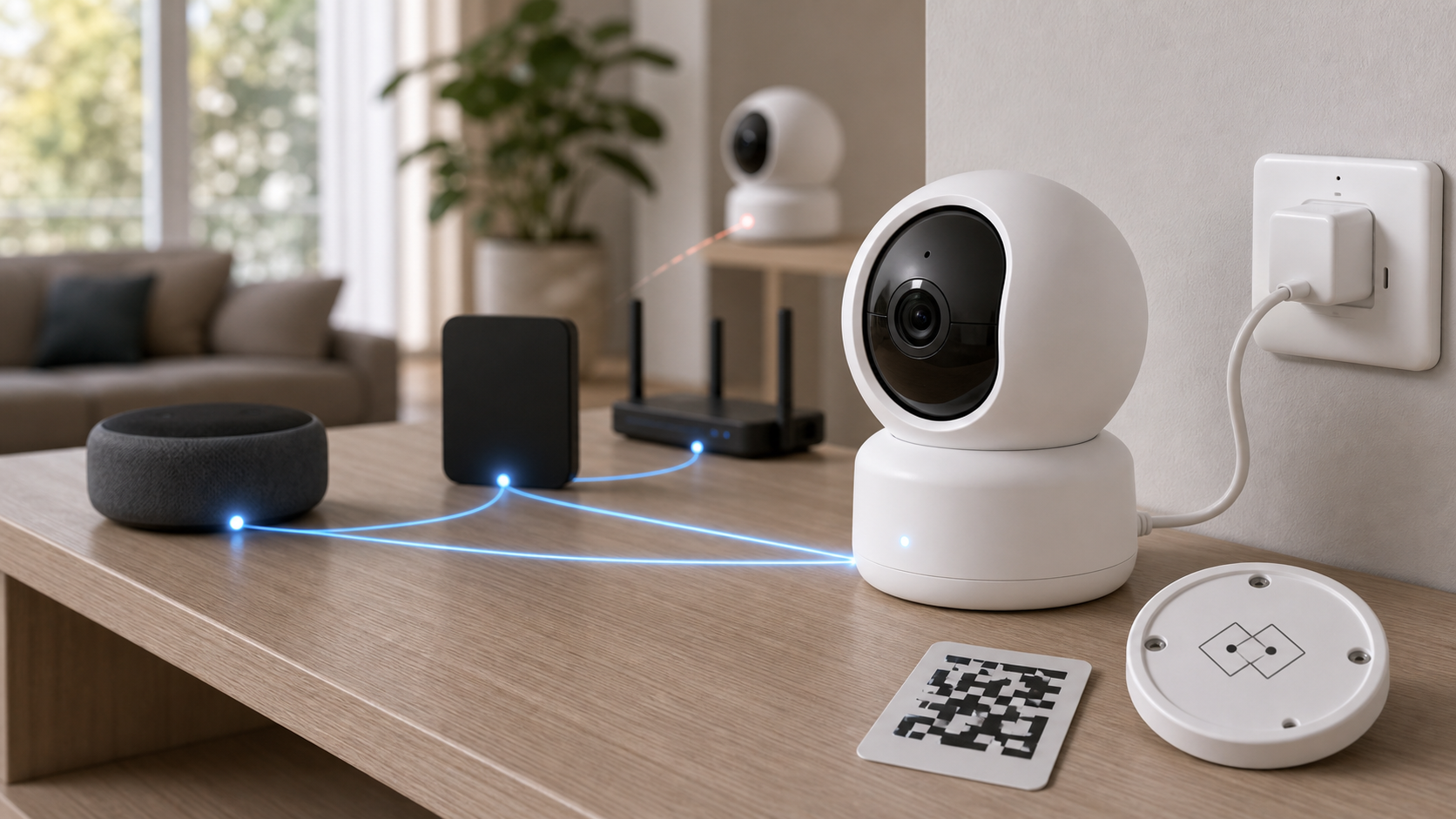
Tapo C260 Matter Certification Makes Hardware Version 2.0 the Buying Check
The Tapo C260 now has a Matter certification record. That does not mean every camera with “C260” on the box is the certified camera.
The decisive detail is smaller: the Connectivity Standards Alliance lists the certified configuration as hardware version 2.0. For buyers, the model name starts the check; the hardware label finishes it.
What the Certification Establishes
The Alliance record names Tapo C260 as the family SKU and C660 as a family variant. It lists firmware version 1.0, hardware version 2.0, Wi-Fi and Bluetooth, and a certification date of June 29, 2026.
That is strong evidence for a specific tested configuration. It is not evidence that C260 V1 hardware will receive Matter through an update, that version 2.0 is in every store, or that every Matter controller already exposes every camera feature.
The distinction is visible in Tapo's own material. Its current U.S. C260 page still offers a download labeled Tapo C260_V1_GPL. The page lists Google Assistant, Alexa, and SmartThings under Smart Integration, but it does not currently list Matter there.
That omission may reflect rollout timing or page maintenance. It is still a reason to verify rather than assume.
The Camera Is More Than Its Badge
On documented hardware, the C260 is a capable indoor camera: 4K 8MP video, 360-degree horizontal and 116-degree vertical pan-and-tilt coverage, local facial processing, two-way audio, physical lens blocking, and customizable privacy zones.
It connects over 2.4 or 5 GHz Wi-Fi and uses Bluetooth for onboarding. Recording can go to a microSD card up to 512 GB or optional Tapo Care cloud storage. RTSP and ONVIF give buyers documented paths to compatible local viewers or recorders.
Those features remain useful even if Matter is not the buying priority. They also make the decision more precise: choose the camera for the recording, privacy, network, and integration path that works now. Treat broader controller support as verified only after setup on the exact hardware and firmware.
Matter Does Not Guarantee the App Screen
Matter 1.5 created a common camera framework for live audio and video, two-way communication, pan-tilt-zoom controls, detection and privacy zones, and local or cloud recording. A certified device can implement that framework without forcing every controller to display every optional function.
Independent reporting from MatterAlpha says the C260, C560WS, and C660 completed Matter camera certification by the end of June. It also flags TP-Link's history of materially different revisions under the same model name and advises buyers to wait for exact release details.
That warning is practical, not theoretical. A controller may support live view before PTZ, recording, detections, or privacy controls. A camera may preserve its richest AI and storage tools in the Tapo app. Certification and feature parity are different questions.
Check Five Things Before Buying
1. Ask the seller for the hardware version and confirm it on the physical label during the return window. 2. Verify the installed firmware and whether the camera presents Matter setup credentials. 3. Check the exact controller—not only the ecosystem name—for live view, remote view, two-way audio, PTZ, detections, recording, and privacy controls. 4. Choose a recording path: microSD, Tapo Care, RTSP/ONVIF, or a controller-supported option. Confirm retention, remote access, and subscription terms. 5. Commission on a temporary surface before mounting. Test Wi-Fi, notifications, microphone, motion tracking, privacy mode, household sharing, and outage recovery.
The 5V camera includes a 3-meter power cord and supports tabletop, wall, or ceiling placement. Plan power and field of view before drilling. Keep private areas outside the frame or inside tested privacy zones.
Physical lens blocking is useful visible reassurance, but it does not replace strong account security, current firmware, limited sharing, careful storage permissions, and deliberate retention. Do not make any consumer camera the only safeguard for emergencies, caregiving, or child safety.
The Takeaway
The C260 certification is meaningful because it gives Tapo a standards-based camera path. Its most important buyer fact is the boundary around that path: hardware version 2.0.
Buy the exact revision and feature set, not the model name alone. If Matter is essential, require proof from the label, firmware, setup flow, and target controller. If those pieces are unclear, wait—or buy for the Tapo, RTSP, and ONVIF capabilities documented today.
- https://csa-iot.org/csa_product/tapo-security-camera-3/ - https://www.tapo.com/us/product/smart-camera/tapo-c260/ - https://www.matteralpha.com/industry-news/tapo-aqara-ulticam-and-ezviz-all-the-matter-certified-cameras - https://csa-iot.org/newsroom/matter-1-5-introduces-cameras-closures-and-enhanced-energy-management-capabilities/