IoTorero's Smart Plug Is an Energy Audit Tool With a 3-Watt Blind Spot
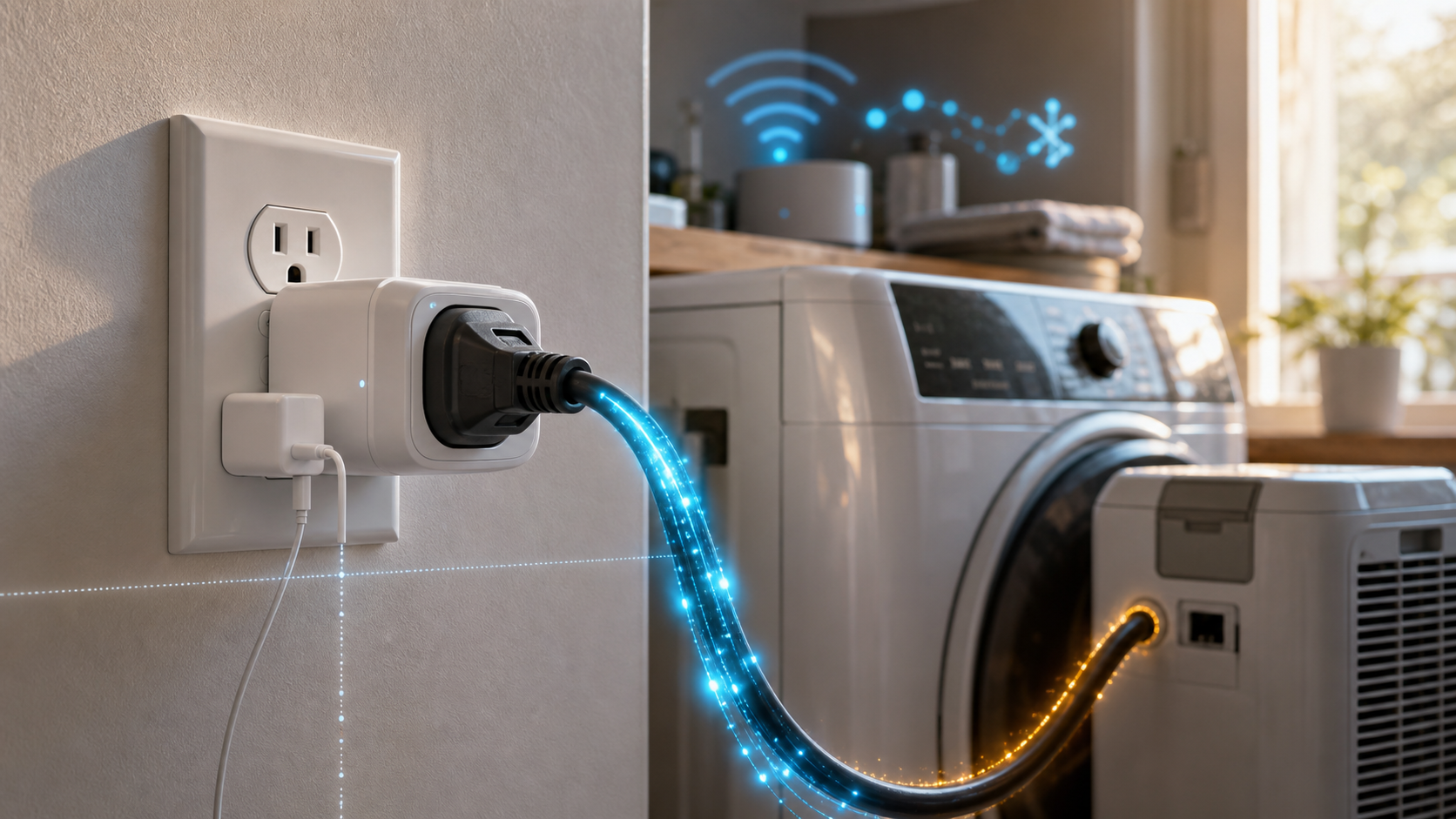
IoTorero's ESP32-C3 U.S. smart plug has joined the Works with Home Assistant program. At $14.35 on July 20, it looks like a cheap route to local control and appliance-level energy data.
The useful question is not whether it can report watts. It is whether its measurement floor, load rating, and power-restoration behavior fit the job you want it to do.
What the Badge Proves
Home Assistant says IoTorero's seven certified devices arrive with ESPHome, work locally without required cloud control, and were tested with Home Assistant Green and the ESPHome integration. The U.S. plug reports voltage, current, active power, and total energy.
That removes much of the firmware and onboarding gamble for a Home Assistant household. It does not make the plug a Matter device, prove direct setup in Apple Home, Google Home, Alexa, or SmartThings, or validate every possible appliance load.
IoTorero lists the U.S. model as SKU PG03V3-US16A-ESP-1. The live page showed a $14.35 sale price versus $18.40 regular price, although prices can change. It specifies 100-250V AC, a 16A maximum for resistive loads, 2.4 GHz Wi-Fi, Bluetooth LE, OTA updates, and a Bluetooth proxy enabled by default.
The Stock Firmware Cannot See Everything
The public ESPHome configuration reveals a practical limit the product summary does not emphasize. Version 2.0.3 averages electrical readings every 10 seconds, forces power readings below 3 watts to zero, and does the same for current below 0.060 amp.
That makes the plug useful for questions with a clear signal: Did the washing machine finish? How much energy did a dehumidifier use this week? Is an appliance still running when it should be off?
It is a poor stock choice for measuring a tiny standby load below 3 watts. CNET's current look at smart-home electricity use also notes that smart plugs consume power themselves. Adding one to every outlet can defeat the point of an energy audit unless each plug answers a worthwhile question.
For cost tracking, compare the plug against a trusted reference meter before relying on its totals. The vendor page names an HLW8032 metering chip, while the current public firmware and ESPHome Devices directory identify CSE7766. That mismatch may be documentation lag or a hardware revision, but buyers should confirm the delivered model instead of assuming chip-specific accuracy.
Check the Load and the Reboot State
A 16A resistive-load maximum is not blanket clearance for every motor, compressor, transformer, heater, or other high-inrush appliance. Read the appliance label and current instructions, leave margin, and choose hardware specifically rated for the load. A software current limit is not a substitute for circuit protection.
Power-loss behavior deserves the same attention. The published configuration defaults the relay to on after reboot, while Home Assistant exposes other choices, including always off and restoration of the prior state. Pick the safe behavior before unattended use, then test it with a controlled power interruption.
That check matters most for consequential loads. A general-purpose smart plug should not be the only safety control for a heater, medical device, refrigerator, pump, or anything that could cause harm when unexpectedly switched on or off.
The Buying Decision
This plug makes sense for a Home Assistant-first household that wants local switching, appliance-cycle automations, Bluetooth coverage, and energy trends above the stock 3-watt floor. Setup is relatively simple: confirm the exact U.S. SKU, connect it to 2.4 GHz Wi-Fi, add the discovered ESPHome device, choose the reboot state, and validate its readings.
Choose something else when the priority is precise sub-3-watt standby measurement, a monitor with no switching relay, direct Matter commissioning across multiple ecosystems, or a load that needs specialized electrical approval.
The certification badge is valuable. The better buying signal is knowing exactly what the plug will measure, what it will ignore, and what it will do when the power comes back.
- https://www.home-assistant.io/blog/2026/07/09/iotorero-joins-works-with-home-assistant/ - https://www.athom.tech/blank-1/esp32-c3-us-plug-for-esphome - https://github.com/athom-tech/esp32-configs/blob/main/athom-smart-plug.yaml - https://www.cnet.com/home/energy-and-utilities/your-smart-home-raising-electric-bill-how-to-stop-it/ - https://devices.esphome.io/devices/athom-smart-plug-pg03v3-us16a/