IoTorero's Mini Relay Is A Wiring Check, Not A Plug-In Upgrade
IoTorero's Power Monitoring Mini Relay now carries the Works with Home Assistant badge. That is meaningful: it arrives with ESPHome, operates locally, and has been tested through the Home Assistant integration.
It is not permission to skip the electrical homework.
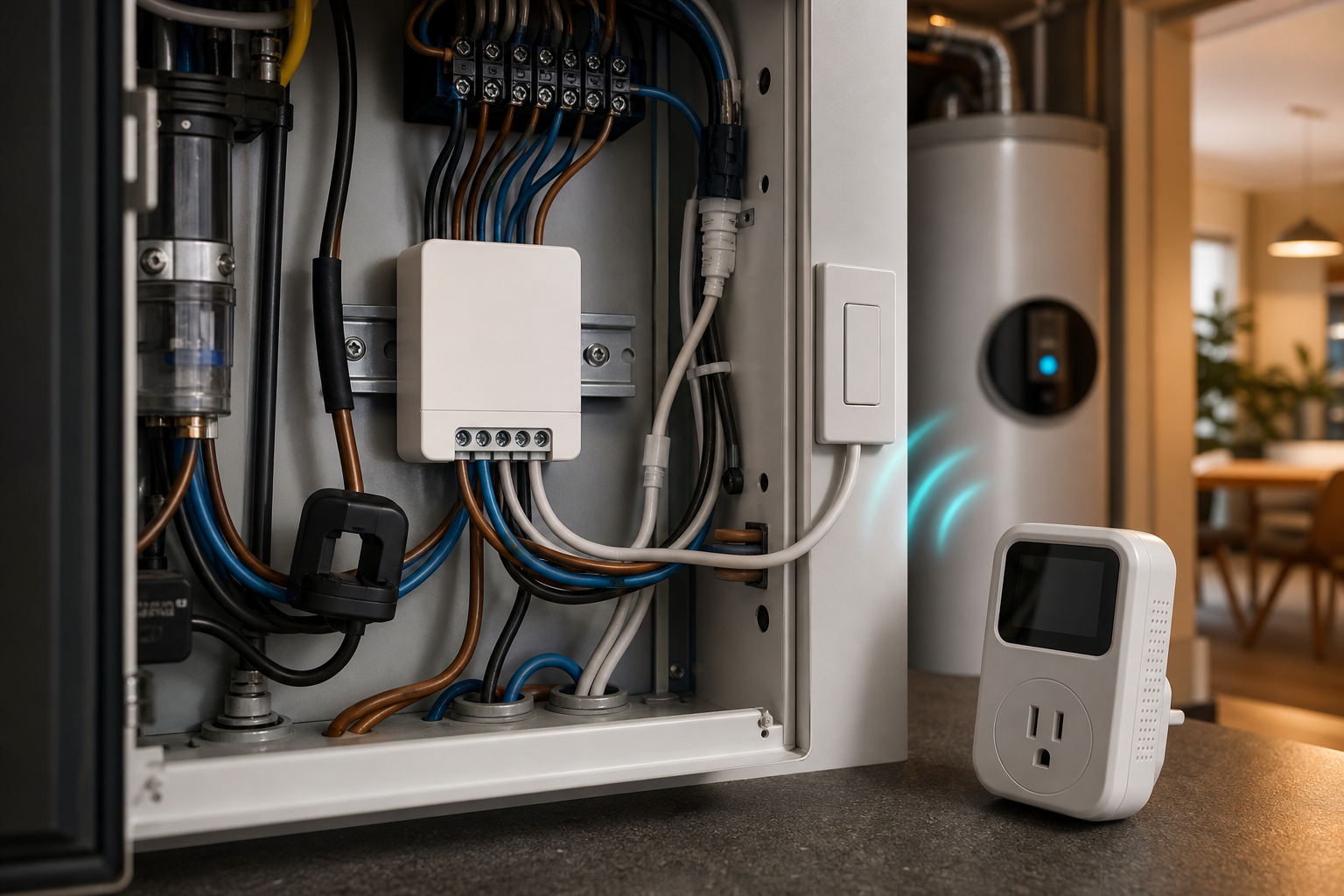
Unlike a smart plug, this module goes inside a wall box or cabinet and switches a hardwired load. The badge reduces software uncertainty. The buying decision still depends on wiring, box space, load behavior, Wi-Fi, reboot behavior, and what “power monitoring” needs to mean in this installation.
What The Badge Actually Proves
Home Assistant says the seven certified IoTorero devices were tested with Home Assistant Green and the ESPHome integration. Works with Home Assistant also requires local operation without mandatory cloud control and a long-term support commitment.
That makes the relay a strong Home Assistant-first option. It does not make it a Matter device or prove direct setup in Apple Home, Google Home, Alexa, or SmartThings.
IoTorero's live page lists an ESP32-C3, 2.4 GHz Wi-Fi, Bluetooth LE proxy support, OTA updates, an external-switch input, a 10A relay, and voltage, current, active-power, and energy readings. It showed a sale price of $11.90 on July 17, down from $17, although that can change.
The Hardwired Fit Comes First
The relay is advertised to fit most standard switch boxes and to work with toggle or momentary switches. “Most” is not a measurement.
Before ordering, identify the exact conductors in the box, read the current model's wiring diagram, and confirm there is room for the module, terminals, wire bends, and the existing switch. Check the connected load and its startup current, not just its normal wattage. A motor, fan, transformer, or LED driver can be a different switching problem from a simple resistive load.
If those checks are unfamiliar, use a qualified electrician. Pre-flashed firmware makes onboarding easier; it does not make mains wiring a beginner software project.
Also test the physical switch after installation. A smart-home outage should not turn an ordinary light into an app-only light.
The Stock Firmware Has Useful Limits
IoTorero's current public ESPHome configuration is unusually helpful because it exposes behavior that a short product page cannot.
The v3.1.1 config averages sensor readings every 10 seconds. It forces power readings below 3 watts to zero and current below 0.060 amp to zero. That can clean up noise, but it also means this is a poor stock configuration for measuring tiny standby loads.
The config exposes a total-increasing energy sensor for Home Assistant and applies a 10A software current threshold that turns the relay off. Treat that shutoff as an automation, not a replacement for proper circuit protection or conservative load selection.
Power-loss behavior matters too: the published configuration defaults the relay off after reboot. That is sensible for some appliances and annoying—or unsafe—for others. Test a controlled power interruption before relying on the installation.
Confirm The Exact Hardware Revision
There is one specification mismatch worth resolving before purchase. The live product page names an HLW8032 energy-metering chip. The current vendor YAML configures a CSE7766, and the ESPHome Devices directory also maps the RS01C3 relay to CSE7766.
That does not prove the product is defective. It may reflect a page error or a hardware revision. It does mean buyers should confirm the delivered model and firmware before assuming chip-specific accuracy or calibration claims apply.
Older reviews need the same caution. A 2021 independent teardown tested an earlier ESP8285 model, not today's ESP32-C3 RS01C3. Its experience can inform a terminal and wiring inspection, but it cannot validate the current hardware.
The Takeaway
IoTorero's mini relay is compelling when local Home Assistant control, an existing wall switch, and appliance-level energy trends belong in the same box. Certification removes much of the firmware gamble.
Buy it only after confirming the exact model, current wiring instructions, enclosure fit, load type, 2.4 GHz coverage, and default-off behavior. If the goal is precise standby measurement, reversible installation, utility-grade metering, or native multi-ecosystem commissioning, choose a device built for that job instead.
- https://www.home-assistant.io/blog/2026/07/09/iotorero-joins-works-with-home-assistant/ - https://www.athom.tech/blank-1/esp32c3-3-way-relay-for-esphome - https://github.com/athom-tech/esp32-configs/blob/main/athom-mini-relay-v2.yaml - https://devices.esphome.io/devices/athom-mini-relay-rs01c3/ - https://www.espthings.io/index.php/2021/10/30/athom-mini-relay-switch-esphome/