Home Assistant Matter Server 9.0 Makes Matter Less Blind
Home Assistant's latest Matter upgrade is not just another compatibility checkbox. Matter Server app 9.0 moves Home Assistant's Matter foundation to matter.js, adds Thread and Wi-Fi network visualization, and prepares the platform for the camera-heavy direction Matter is taking next.
That matters because cameras, doorbells, locks, sensors, and Thread devices fail in ways buyers can actually feel. A light that drops offline is annoying. A video doorbell, garage controller, leak sensor, or security camera that drops offline is a trust problem.
What changed
Home Assistant says the new Matter experience is delivered through Matter Server app 9.0 as a compatible drop-in replacement for the previous Python-based server. After updating, the first start migrates existing data and the system is meant to work the same way afterward.
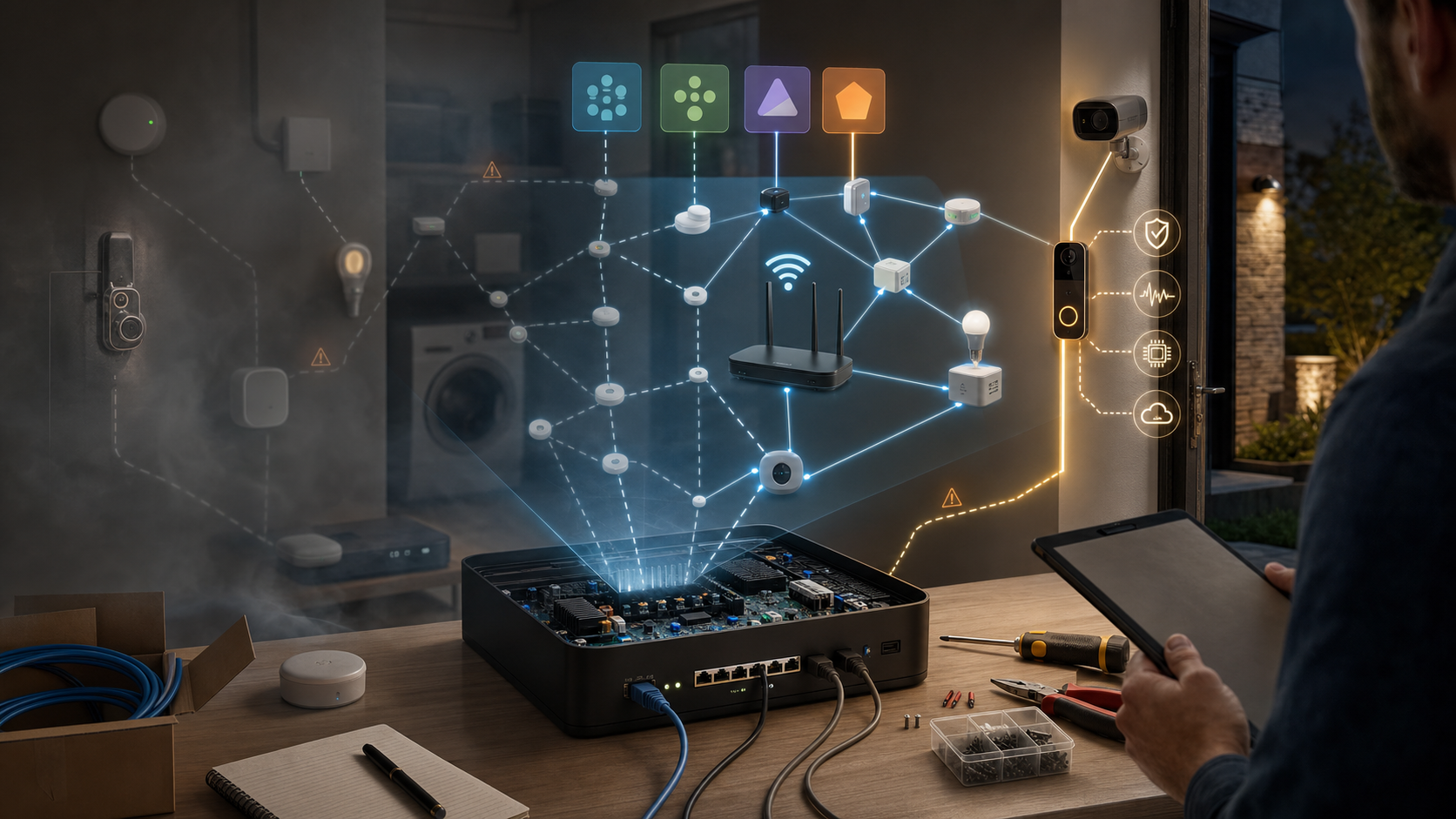
The practical gains are reliability and visibility. Home Assistant says the new server improves startup, recovery, device reconnection, network responsiveness, and over-the-air update reliability. It also adds a Matter Server web UI that can visualize Thread and Wi-Fi networks.
That visualization is the buyer-relevant part. Thread devices choose their own routes through a mesh, and weak placement can turn "Matter support" into random dropouts. The new view can show devices as nodes, indicate roles such as leader, router, or sleepy end device, and color links by connection quality. For Wi-Fi Matter devices, it can show which access point a device is using and the signal quality.
Why camera support raises the stakes
CSA's Matter 1.5 release brought cameras and video doorbells into the standard. The spec covers live video and audio streaming with WebRTC, two-way communication, local and remote access, pan-tilt-zoom controls, detection and privacy zones, and flexible local or cloud recording options.
Matter 1.5.1 then tightened camera performance. CSA says it adds multi-stream video and audio delivery, so a camera can send different streams for recording, mobile viewing, analysis, or multi-lens use. It also adds HEIC snapshots, HLS and DASH recorded-video upload support, PTZ refinements, and improvements around doorbells, chimes, and intercoms.
That does not mean every Matter camera will suddenly behave identically in every app. It means the standard now has more of the pieces camera makers and controllers need. Home Assistant's move to Matter 1.5.1 support makes it better positioned for those devices, but buyers should still verify the exact camera, firmware, controller, and ecosystem behavior before replacing a known-good setup.
The operator lens
If you already run Home Assistant, update planning matters. Independent coverage from matter-smarthome notes that the first migration can take minutes depending on hardware and stored attributes. It also says the new server may use roughly double the RAM of the previous Python server, which matters on older boxes or busy installations.
That is not a reason to avoid the upgrade. It is a reason to treat it like infrastructure. Back up first, update when you can watch the system, and check whether your Thread and Wi-Fi devices come back cleanly before adding more hardware.
The security changes are also worth noticing. Home Assistant says the new server blocks uncertified devices with official development or test certificates by default during commissioning, and checks certificate revocation data. For a home network that may include cameras, locks, and sensors, that is not cosmetic. Commissioning should be stricter as the device mix gets more sensitive.
What to check before buying
First, separate standards support from product support. Matter 1.5 and 1.5.1 define camera capabilities, but your actual result depends on the camera, controller, app, firmware, network, and ecosystem.
Second, map the network before blaming the device. If a Thread sensor or Wi-Fi camera is unreliable, look for weak mesh hops, poor router placement, overloaded access points, or border-router confusion.
Third, take privacy features seriously. For cameras and doorbells, check whether privacy zones, recording destinations, remote access, chime behavior, snapshots, and two-way audio work the way you expect in your chosen app.
Fourth, watch hardware headroom. A small Home Assistant box that was fine for sensors and lights may need more RAM and patience as Matter, Thread, video, and diagnostics grow.
The takeaway
Home Assistant Matter Server 9.0 is most useful because it makes Matter less invisible. It gives operators a better way to see Thread and Wi-Fi problems, tightens commissioning, and moves the platform closer to the camera and doorbell features Matter is standardizing.
For buyers, the advice is simple: update Home Assistant before expanding the Matter network, use the new visualization before buying repeaters or replacing devices, and do not buy a Matter camera on the word "Matter" alone. Verify the exact controller support, privacy behavior, bandwidth impact, and fallback path before trusting it with security.
- https://www.home-assistant.io/blog/2026/06/23/the-matter-upgrade-youve-been-waiting-for/ - https://csa-iot.org/newsroom/matter-1-5-introduces-cameras-closures-and-enhanced-energy-management-capabilities/ - https://csa-iot.org/newsroom/matter-1-5-1-enhancing-camera-performance-and-expanding-device-flexibility/ - https://matter-smarthome.de/en/products/home-assistants-new-matter-server-is-a-game-changer/ - https://www.theverge.com/tech/904361/matter-spec-update1-5-1-camera-video-streaming-heic-doorbell-chimes