SmartThings API Fees Are an October Check, Not an App Panic
Samsung SmartThings has put an October 2026 date on a change that matters more to power users than to casual app users: SmartThings API access is moving toward paid commercial tiers, with a $4.99 monthly personal plan for non-commercial individual developers.
That is not the same thing as charging every SmartThings household to turn on a light. It is a warning to inventory how much of the home quietly depends on SmartThings as a cloud API.
The Signal
Samsung says the SmartThings API is the gateway that connects third-party apps and platforms to the SmartThings ecosystem. The company says its API supports a multi-protocol ecosystem that includes Matter, Cloud-to-Cloud, Zigbee, and Z-Wave, with Samsung device data and controls layered on top.
The new pricing is aimed at API users: commercial partners, individual developers, dashboards, platform integrations, and custom smart-home projects. Samsung says ordinary SmartThings app users with Works with SmartThings partner devices are not affected by this API update.
That split is the whole story. If SmartThings is just the app where the household taps lights, plugs, cameras, sensors, or routines, this is probably not an emergency. If SmartThings is feeding another system, it is time to make a list.
What Changed
Samsung says free API access will remain through Q3 and that it will not begin applying new usage limits or phasing out free access until October 2026. The company also plans an API Usage Dashboard so partners and individual developers can see call volume and choose a tier.
The missing details still matter. Samsung has not published the full personal-plan limits, transition mechanics, or carve-outs for major community integrations. That means the useful action today is not to rip out a hub. It is to identify where the API is part of the home.
Open Home Foundation adds the clearest operator warning for Home Assistant users. Its June newsletter says the Home Assistant SmartThings integration will be affected by Samsung's changes and will fall under the new personal plans. The Verge separately reports the same core concern: advanced users can be caught if they access the API directly or rely on tools that do.
Buyer / Operator Lens
Start with a simple question: what breaks if SmartThings cloud API access changes in October?
For app-only users, the answer may be "nothing obvious." SmartThings hubs and the app still matter for many Matter, Zigbee, Z-Wave, cloud, and Samsung device setups.
For Home Assistant users, the answer may be bigger. If SmartThings is only a bridge for a few non-critical appliance sensors, paying or waiting may be acceptable. If it drives automations, energy dashboards, rental access workflows, climate routines, or status alerts, it deserves a migration plan.
For buyers, this changes how SmartThings should be evaluated. A product that only works well through one cloud platform now has a new lifetime-cost question. That does not make it a bad device, but it does make local control, Matter support, Zigbee/Z-Wave access, and exportable automations more valuable.
What To Check Before Acting
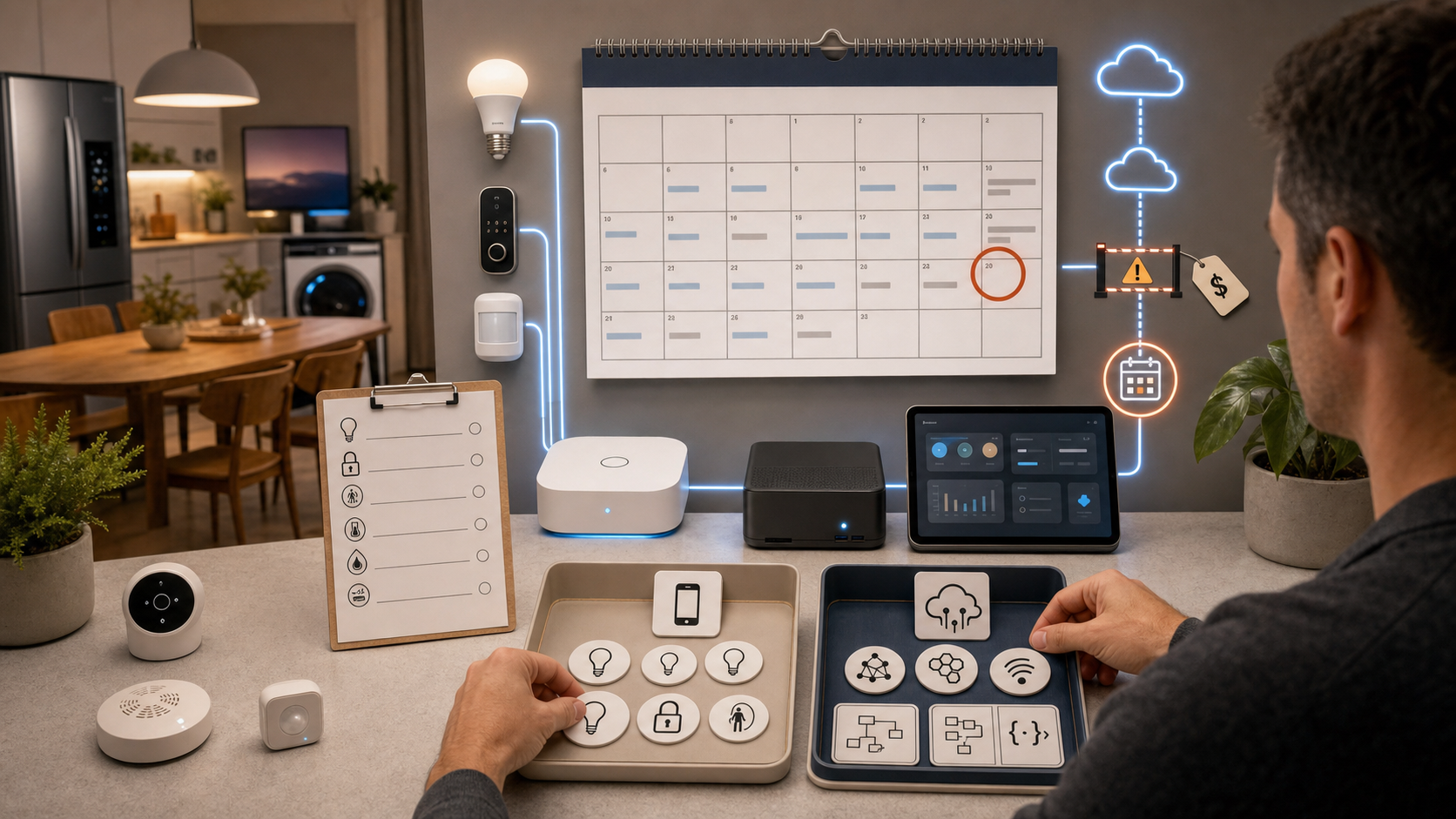
List every automation, dashboard, script, and third-party app that touches SmartThings. Include Home Assistant entities, personal access tokens, command-line tools, rental/property dashboards, Stream Deck or watch controls, and any app that controls SmartThings without opening the SmartThings app itself.
Separate local device control from cloud orchestration. A Zigbee or Z-Wave device may be physically local to a hub, but the workflow around it can still depend on SmartThings cloud APIs if another platform is reading or controlling it through SmartThings.
Mark safety-adjacent routines. Locks, alarms, leak alerts, access control, climate protection, and elder-care monitoring should have conservative fallbacks before October. A pricing or account change should not be able to silently turn a safety routine into a subscription problem.
Watch for final plan details before spending money. Samsung says more guidance for personal users is coming. Home Assistant is also likely to clarify what its users need to do once Samsung's final terms are available.
Use this as a buying filter. New devices should be judged by how they work if the vendor cloud changes. Matter, Zigbee, Z-Wave, local APIs, and direct Home Assistant support can reduce exposure, but only if the exact device and controller path actually support the features you need.
The Takeaway
The SmartThings API fee is not a reason for every SmartThings user to panic. It is a reason for serious smart-home operators to stop treating cloud API access as invisible plumbing.
The practical move is to make the dependency map now. If a routine only lives inside the SmartThings app, keep watching. If a routine crosses into Home Assistant, a custom dashboard, a rental system, a script, or a third-party service, treat October 2026 as a planning deadline. The best smart home is not just compatible on setup day. It is understandable when the platform business model changes.
- https://community.smartthings.com/t/a-new-enhanced-smartthings-api-experience/309947 - https://developer.smartthings.com/devices - https://newsletter.openhomefoundation.org/breaking-free-from-the-disposable-smart-home/ - https://www.theverge.com/tech/957597/samsung-smartthings-api-charges