Tapo P110M Is a Cheap Matter Plug With a Platform Catch
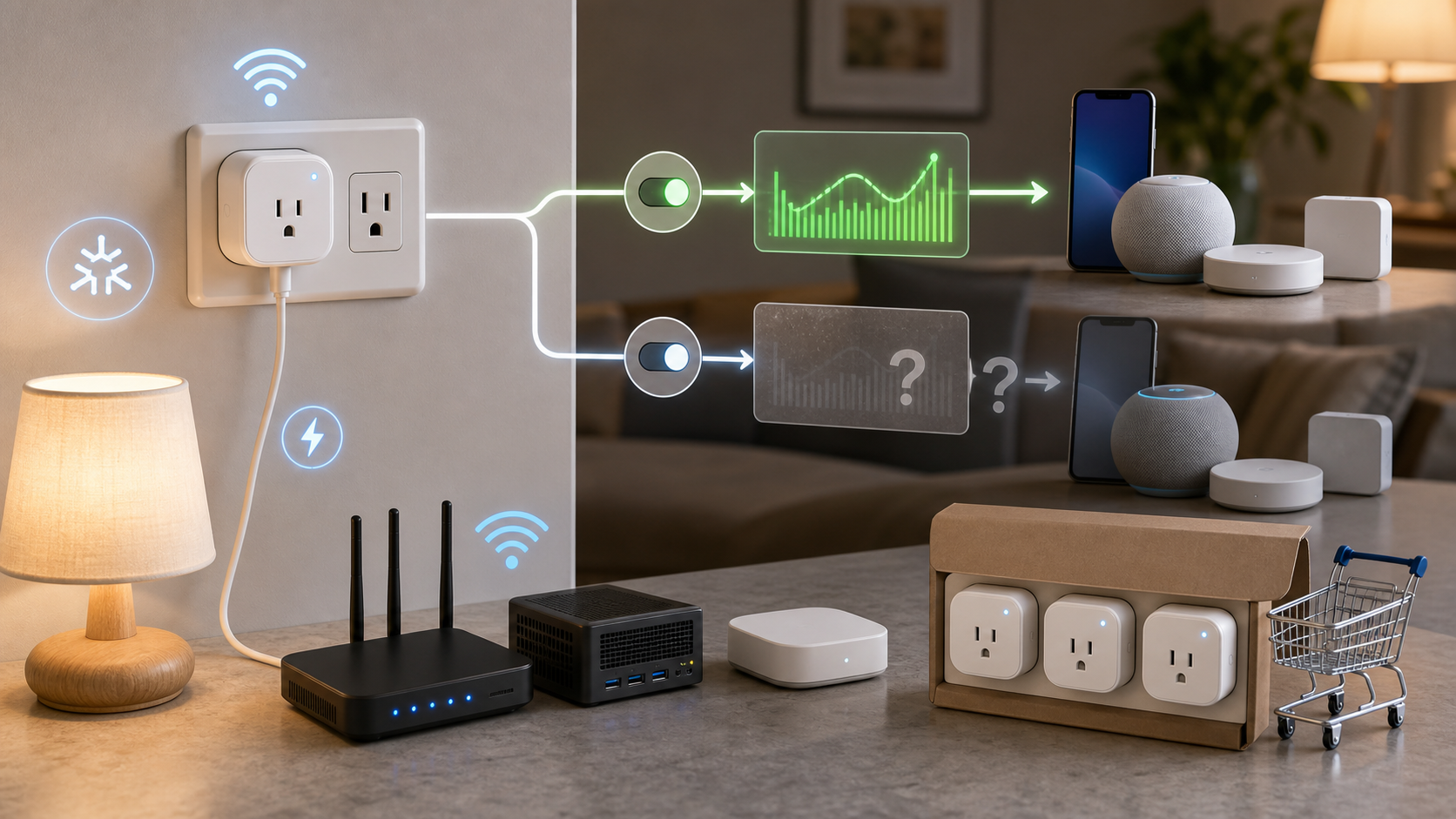
Tapo P110M looks like the easy smart-plug answer: Matter support, energy monitoring, a compact body, and a street price that can land near impulse-buy territory. That is exactly why it deserves a closer look. The important question is not whether the plug can turn a lamp on and off. It is whether the platform you actually use will show the energy data you are buying it for.
What Changed
The current Tapo P110M signal is value plus compatibility. TP-Link lists it as a Matter-certified mini Wi-Fi plug with energy monitoring, bill-estimation inputs, schedules, auto-off, away mode, remote control, and local Tapo app control. The official US Tapo store showed a four-pack at $35.99 during this run, discounted from $49.99.
For a buyer replacing older cloud-only plugs, that is attractive. A plug that can work through Matter, report energy use, and avoid blocking adjacent outlets solves several practical problems at once.
But the fine print matters. TP-Link's product page lists 2.4 GHz Wi-Fi only, Bluetooth for setup only, and a 15A / 1800W maximum load for general or resistive loads. This is a Wi-Fi smart plug, not Thread. It is also not permission to automate any high-draw device casually.
The Matter Catch
Matter is useful here, but it does not erase platform differences. TP-Link says P110M can be set up through the Tapo app over Bluetooth or by scanning the included Matter code with compatible apps such as Alexa, Google Home, and Apple Home. The same page lists Matter, Apple Home, Alexa, Google Assistant, and Samsung SmartThings compatibility.
That covers control. Energy monitoring is where buyers need to slow down.
TP-Link's own firmware announcement says Matter energy monitoring arrived through Matter 1.3 and rolled out first to Tapo P110M. It also says the product and hub should be updated to the latest version. Most importantly, TP-Link warned that Matter energy-monitoring support was still uneven across platforms, naming SmartThings and Home Assistant as compatible at that stage.
MatterAlpha's independent review found the same practical split. The plug paired into Apple Home for on/off control, but energy monitoring was not exposed there at the time of writing. After firmware update and Home Assistant pairing, the review saw current power, consumption, effective current, and effective voltage.
So the buyer question becomes simple: do you want a Matter plug, or do you specifically want energy data inside your chosen ecosystem?
Buyer Lens
P110M makes the most sense for three groups.
First: Home Assistant and SmartThings users who want inexpensive plug-level energy data. For them, the P110M can be a useful way to watch a dehumidifier, desk setup, media cabinet, fan, or appliance that stays within the plug's rating.
Second: Tapo users who are fine keeping the vendor app around. TP-Link's app-side features include energy visualizations, bill estimates, Smart Charge Guard, and power protection settings. Those may be the features that justify the purchase even if a preferred Matter controller only shows on/off.
Third: buyers who mainly need reliable Matter on/off control and see energy monitoring as a bonus. If the price is right, the plug still competes well as a basic smart plug.
It is weaker for buyers who want a pure one-app Matter experience today. If the goal is Apple Home or another controller showing complete watt and kWh history without the Tapo app, verify that exact platform support first.
Setup Checklist
Before buying a pack, check four things.
Confirm the load. TP-Link lists 15A / 1800W for general or resistive load. Do not use the plug to paper over questionable wiring, oversized heaters, or loads outside the product guidance.
Confirm the network. This is 2.4 GHz Wi-Fi only. If your router setup makes 2.4 GHz onboarding annoying, expect setup friction.
Confirm the firmware path. TP-Link's energy-monitoring update depends on current firmware, and MatterAlpha's review had to use the Tapo app before energy features appeared properly.
Confirm the ecosystem. SmartThings and Home Assistant are the safer bets for Matter energy data based on the current source pack. Apple Home, Alexa, and Google Home may still be good controllers for on/off, but that is not the same as full energy monitoring.
The Takeaway
Tapo P110M is compelling because it is cheap enough to deploy around the house and specific enough to answer real energy questions. That makes it more interesting than another basic smart plug.
The catch is that Matter compatibility and Matter energy monitoring are not identical buyer promises. If you are building around Home Assistant or SmartThings, P110M deserves a close look. If you expect every Matter controller to show the same power data, wait, verify, or buy one plug before committing to a four-pack.
- https://www.tp-link.com/us/home-networking/smart-plug/tapo-p110m/ - https://us.store.tapo.com/products/tapo-p110m-4-pack - https://www.tp-link.com/en/press/news/21871/ - https://csa-iot.org/csa_product/smart-wi-fi-power-strip-8/ - https://www.matteralpha.com/review/tapo-p110m-review-matter-smart-plug