Jackery FridgeGuard Is a Fridge-Backup Check, Not a Whole-Home Battery
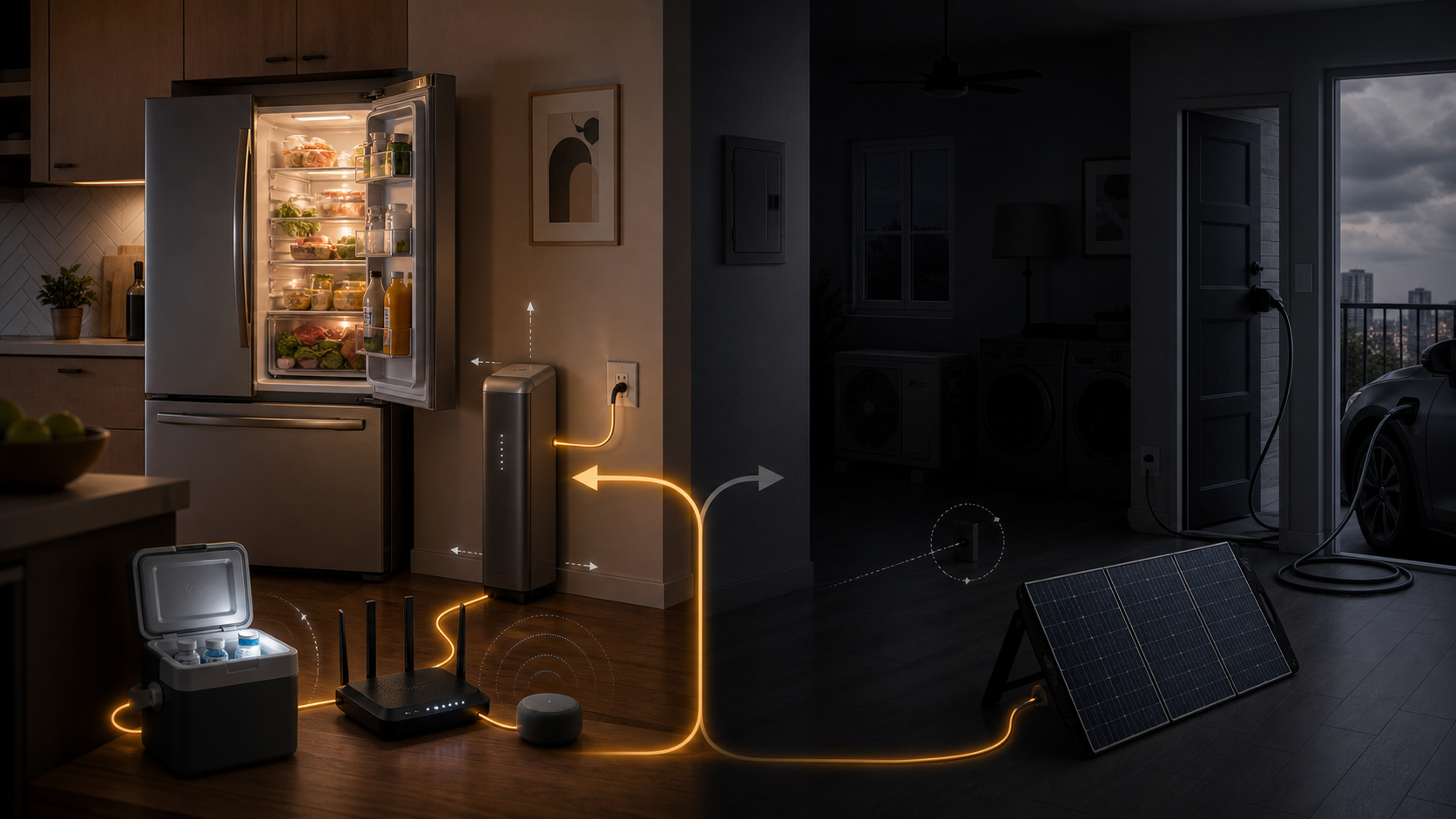
Jackery FridgeGuard is easy to misread. It looks like a slim power station for the kitchen, but the smarter buyer lens is narrower: this is an appliance-backup device for a refrigerator and a few essentials, not a replacement for a whole-home battery system.
That distinction matters. A refrigerator is one of the few appliances that can turn a short outage into spoiled food, lost medication, or a safety problem. A dedicated fridge battery can make sense, especially for renters and apartment owners who cannot install a transfer switch or a larger backup system. But it still has to pass a practical checklist: runtime, placement, compressor surge, ventilation, retailer pricing, and what else the household expects it to protect.
What Changed
Jackery announced FridgeGuard on June 17, 2026. The company describes it as an ultra-slim refrigerator backup battery with a 2.6-inch profile, 10 ms UPS switchover, and up to 15 hours of off-grid runtime.
The product page lists the core hardware as 1024Wh capacity and 800W output. Jackery also says the unit can expand up to 2048Wh with a battery pack, recharge from AC, solar, or car power, and use app-based power monitoring and Time-of-Use scheduling.
The important setup detail is the inline design. Jackery says the unit connects between a wall outlet and the refrigerator, then stays on standby. That is very different from hauling a generic power station out of a closet after the lights go out.
The Buyer Question
The case for FridgeGuard is not "power everything." It is "keep the fridge running without rewiring the home."
That can be valuable if the home has frequent brief outages, expensive groceries, medication in the refrigerator, baby formula, or a freezer that should not be left to chance. Jackery also mentions uses such as Wi-Fi, home-office devices, aquarium pumps, and CPAP machines, but buyers should treat those as load-planning questions, not free extras. Every additional device reduces available runtime.
The biggest runtime caveat is refrigerator behavior. Jackery's launch release says up to 15 hours from the 1024Wh unit and up to 30 hours with expansion. The Verge reports roughly 10 hours for a typical US fridge/freezer combo, or about 20 hours with expansion. Both can be true in different conditions. Compressor duty cycle, room temperature, fridge age, door openings, and whether the freezer is packed all change the result.
Buy for a realistic outage window, not the best headline number.
Setup And Safety
FridgeGuard is lower-friction than a hardwired backup system, but it is not zero-planning. Jackery says the unit weighs 23 lb / 10.5 kg and supports floor-standing, bracket-mounted, and wall-mounted configurations. That means buyers need a safe position near the refrigerator, a reachable outlet, and enough clearance that heat vents are not blocked.
The compressor surge claim is the other key operator fact. Jackery says FridgeGuard provides 1600W compressor-ready peak output, plus surge and grid-anomaly protection. That is exactly the kind of detail buyers should verify against the appliance they want to back up. A fridge battery only helps if it can handle the starting surge and normal cycling of the refrigerator attached to it.
Medical-device backup deserves extra caution. A CPAP machine, medication fridge, or aquarium pump may be a valid use case, but do not assume runtime from refrigerator marketing. Check the device's wattage, battery runtime estimates, alarm behavior, and manufacturer guidance before depending on one battery for health or animal-safety needs.
Price And Availability
The purchase path needs a second look. Jackery's launch release says FridgeGuard starts as a Costco exclusive for members at $559.99, discounted from a recommended retail price of $699.99. During this run, Jackery's own product page showed FridgeGuard at $799, a bundle with Battery Pack and Mounting Bracket at $1,299, and the Battery Pack at $669, with sold-out/notify status visible.
That is not a reason to ignore the product. It is a reason to check the live retailer page before buying. Launch pricing, member pricing, bundle pricing, and direct-store status may not match on the same day.
The Takeaway
FridgeGuard is most interesting because it brings backup power to one high-priority appliance without turning the purchase into an electrical project. For many homes, that is more realistic than a large battery wall or generator.
The right buyer is someone who wants refrigerator-first resilience, has a clean placement path, understands the runtime target, and is willing to verify pricing at purchase. The wrong buyer is someone expecting a 1024Wh slim battery to behave like a whole-home energy system.
Treat it as a fridge-backup check: one appliance, one outage window, one safe installation plan. If that plan is solid, the product category makes sense. If the goal is multi-day backup for many circuits, step up to a larger system instead.
- https://www.jackery.com/products/jackery-fridge-guard - https://www.globenewswire.com/news-release/2026/06/17/3313655/0/en/Jackery-Introduces-FridgeGuard-The-World-s-Slimmest-Refrigerator-Backup-Battery-Always-Ready-for-Instant-Outage-Protection.html - https://www.theverge.com/tech/949683/jackery-fridgeguard-worlds-slimmest-fridge-battery - https://www.notebookcheck.net/Jackery-launches-new-FridgeGuard-power-station-to-take-on-Bluetti-s-FridgePower.1323516.0.html