Apple Home Energy Is a Data Check, Not a Buying Signal
Apple Home is moving toward a more serious energy and network-management story. That is useful. It is also easy to overbuy from the headline.
The better question is not whether Apple Home can show more smart-home energy information. The better question is whether the devices, utility account, hub, and Thread network in a real house can give Apple Home data worth acting on.
What Changed
Matter Alpha reported that the iOS and tvOS 27 beta cycle brings several Apple Home changes, including Thread 1.4 in tvOS, a refined Matter onboarding flow, and a dedicated energy-management surface in the Home app. The same report also included important caveats: early testers did not yet see a visible ephemeral-code flow for Thread network unification, HomePod 2 and HomePod mini did not have developer beta coverage at the time of writing, and energy readings were not selectable as Home app automation triggers or Shortcut conditions yet.
That makes this a readiness story, not a shopping trigger.
Apple's own public Home page says the Home app controls HomeKit- or Matter-enabled accessories and that HomePod, HomePod mini, and Apple TV can be set up as smart home hubs. Apple also says Matter-certified accessories require a HomePod or Apple TV running compatible software.
So if Apple Home is about to become more energy-aware, the hub and accessory list matter as much as the iPhone update.
Energy Visibility Has Two Different Paths
Apple already documents one practical energy path: connecting a participating U.S. utility account to the Home app. Apple Support says this can show home electricity usage over time, trends, and cleaner versus less clean usage periods. It also says the data is typically delayed by 24 to 72 hours and requires a residential electrical service with a participating utility provider, plus access by the account owner or an authorized account holder.
That is useful for bill awareness and habit changes. It is not the same as instant device-level control.
Matter energy support is the other path. CSA's Matter 1.4 release says the standard expands energy-management capabilities for solar panels, batteries, heat pumps, water heaters, EV charging preferences, thermostat presets, and Device Energy Management. In plain terms, Matter is trying to make more energy devices understandable to controllers.
But the chain still has links. The device has to expose the right data. The controller has to display it clearly. Automations have to be allowed to use it. The household has to understand whether a number is real-time, delayed, estimated, or utility-reported.
That is why a smart plug or energy monitor should not be bought only because an Apple Home tab exists.
Thread 1.4 Is About Reliability, Not Magic
Thread 1.4 is the other meaningful piece. Thread Group says the update is intended to make Matter smart-home networks more user-friendly, interoperable, and robust by standardizing how devices and Thread Border Routers recognize and trust each other. Its listed features include credential sharing, Thread over Infrastructure, network diagnostics, commissioning at scale, enhanced robustness, direct cloud connectivity, and backward compatibility.
For buyers, that points at a real pain point: homes with multiple border routers can end up with confusing Thread behavior. One ecosystem may create a network that another ecosystem does not use cleanly.
Thread 1.4 is designed to reduce that mess. It does not prove that every Apple TV, HomePod, Google device, Alexa hub, SmartThings hub, or Home Assistant setup will immediately share one clean Thread network. Firmware, platform timing, and actual hub support still decide the outcome.
Before buying a hub for Thread reasons, verify the exact model, software version, and whether the other ecosystems in the home can join the same Thread network.
The Buyer Checklist
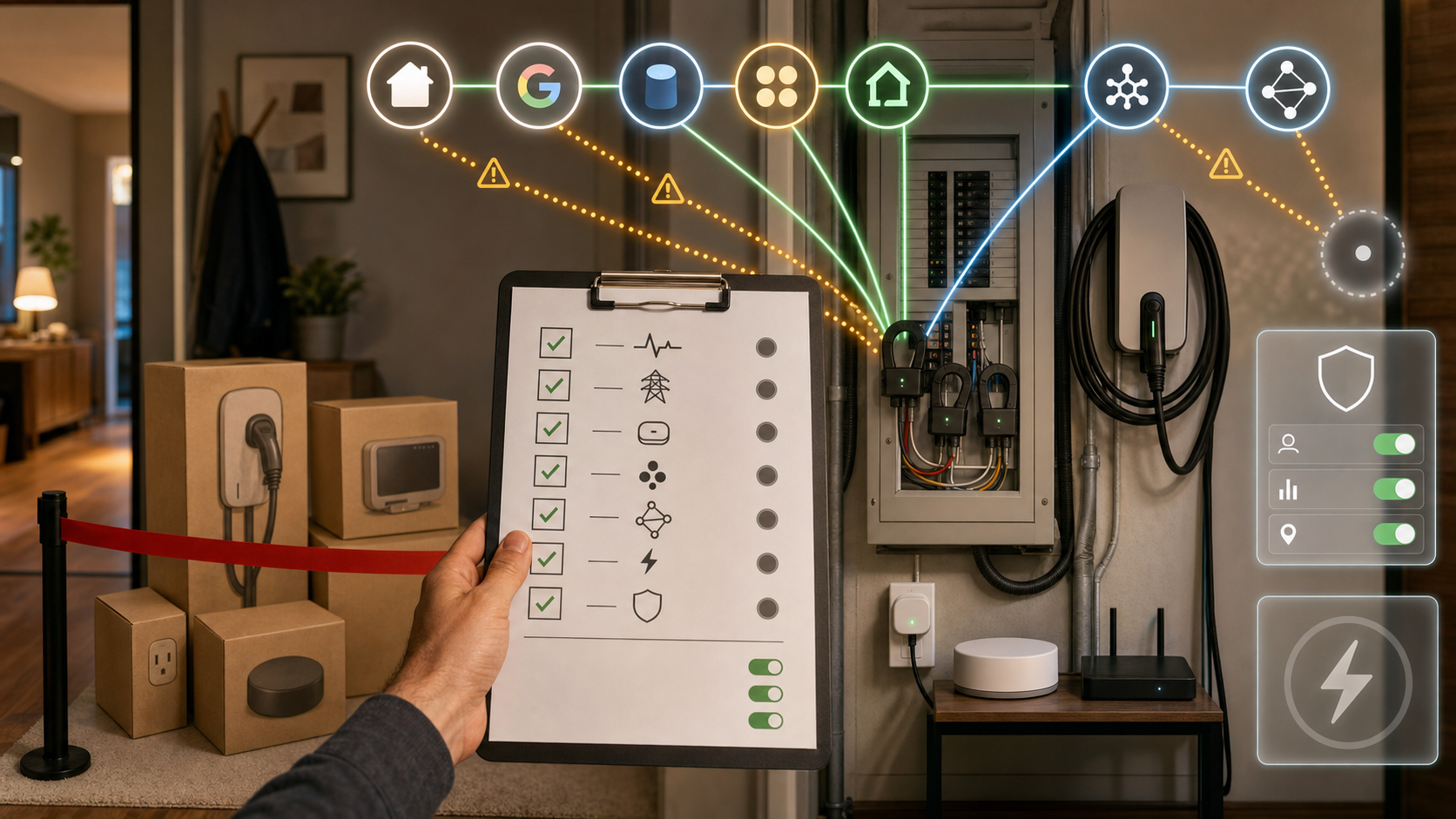
If this Apple Home direction is why a purchase is on the table, check five things first.
First, identify the energy source. Is the plan to link a utility account, read a Matter smart plug, monitor an EV charger, or watch a heat pump? Those are different jobs.
Second, check whether the data is actionable. A delayed utility trend can help with planning. It may not be suitable for turning appliances on and off.
Third, verify the Apple hub. Matter accessories and remote automations depend on compatible Apple TV or HomePod software.
Fourth, confirm Thread support at the actual border router. A product page saying Thread is not the same as tested Thread 1.4 behavior.
Fifth, review who can see the data. Energy history can reveal occupancy patterns, work-from-home routines, appliance use, and EV charging habits. Apple says Home app data is stored in a way Apple cannot read and that communication is end-to-end encrypted, but shared Home access still deserves a quick audit.
The Takeaway
Apple Home becoming more energy-aware is a good direction because it connects smart-home convenience to real operating decisions: what uses power, when it uses power, and whether the network is reliable enough to automate around it.
The buying advice is conservative. Do not buy an energy device because Matter 1.4 exists. Do not buy a hub because Thread 1.4 is in a beta report. Do not assume a utility-linked energy chart can drive real-time automation.
Buy when the exact device, data path, hub, software version, automation support, and privacy setup are confirmed. That is when Apple Home energy becomes useful instead of just interesting.
- https://developer.apple.com/ios/ - https://www.apple.com/home-app/ - https://support.apple.com/guide/iphone/view-electricity-usage-and-rates-iphb93a7973e/ios - https://csa-iot.org/newsroom/matter-1-4-enables-more-capable-smart-homes/ - https://threadgroup.org/resources - https://www.matteralpha.com/industry-news/ios-27-apple-home-thread-1-4-4k-energy